

This Happens Every Spring
Planning your golf game to peak during the season

It’s around March that the same things start to happen. Having taught full-time for two decades, you start to see patterns. Not the exact same details every year, but the same trends.
In the Northeast, spring is just about ready to thaw after a long winter of sub-50-degree days. Most people turn their attention to other sports or hobbies, and some even head south for warmer weather. But without fail, for the majority of golfers — whether they hit balls all winter from a mat and hitting bay or not — this is when the season really begins and their golf engines start to fire up.

One thing I see a lot is panic. Golfers finally get outside onto real grass or back onto the golf course, and they’re disappointed in themselves. It’s not their best golf. To be fair, the greens are still slow because the weather hasn’t warmed enough to get the turf growing, and many fairways have recently been aerified to get the soil in shape for the summer season. Hardly anyone feels like their best golfer is in there somewhere.
And I usually hear about it. I actually like hearing it, because it gives me the chance to calm them down and remind them of this: your golf game is not supposed to be at its peak at the beginning of the season. For most players, it’s simple — you haven’t played enough yet. You will get it back, but you need some time on the practice tee to get everything in order.
High-performing athletes actually intend to have an off-season, and the process of getting back to playing shape is intentional.
There’s a great process that every good athletic coach understands and uses called periodization. It’s a sports training schedule that organizes work into planned phases so the athlete improves and peaks at the right time for competition.
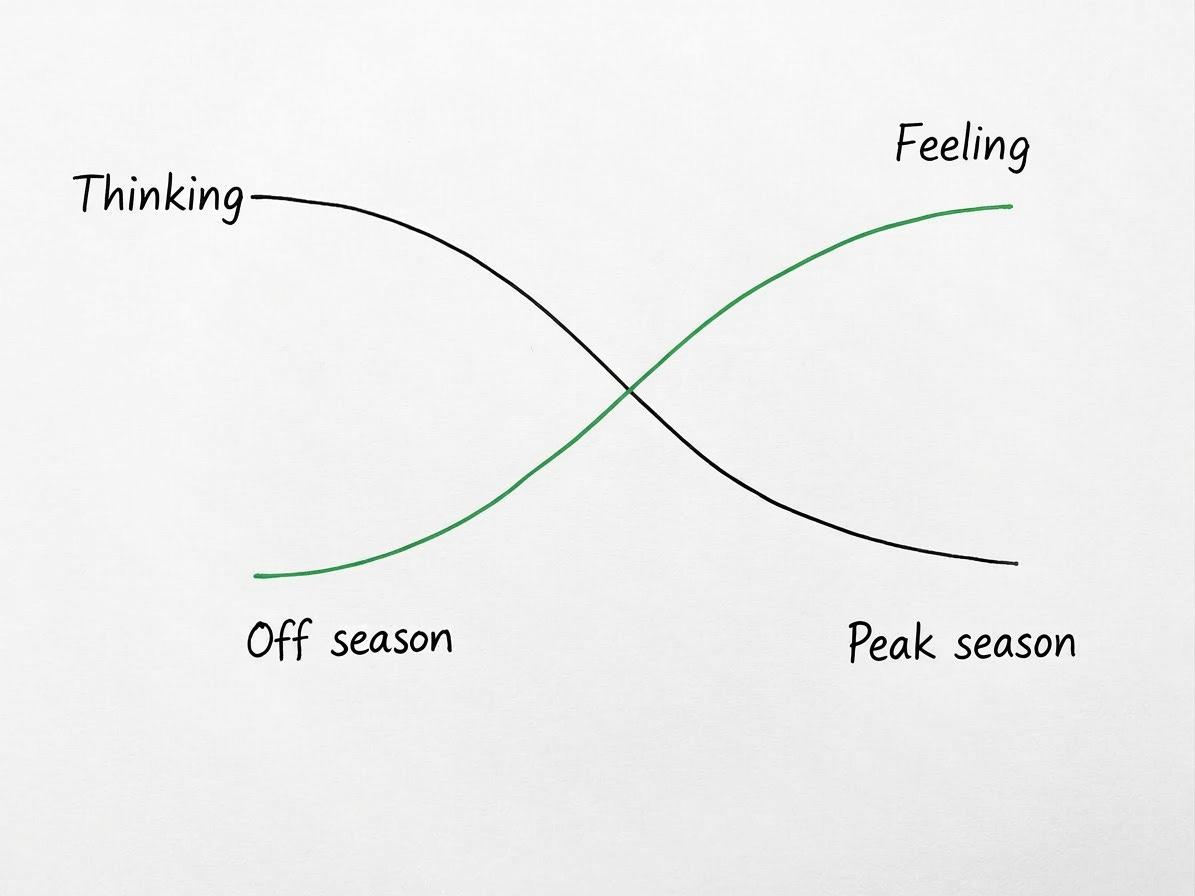
The graphic gives a basic picture of how “thinking” is high during the off-season, when a player is working on something, and then reduces as the season gets underway. Ideally, that “thinking” is at a low so that the player can “feel” during tournament time.
Whenever you’re building new patterns or making technical changes to your golf swing, it requires thought. It requires conscious effort because you have to catch yourself making the old move and intentionally choose to do something different. The new move.
That kind of thinking is required when making changes, but can be very disruptive during a round of golf, which is why it’s best done in the off-season. Then, by spring, the player is ready to start transferring it onto the golf course and into competition.
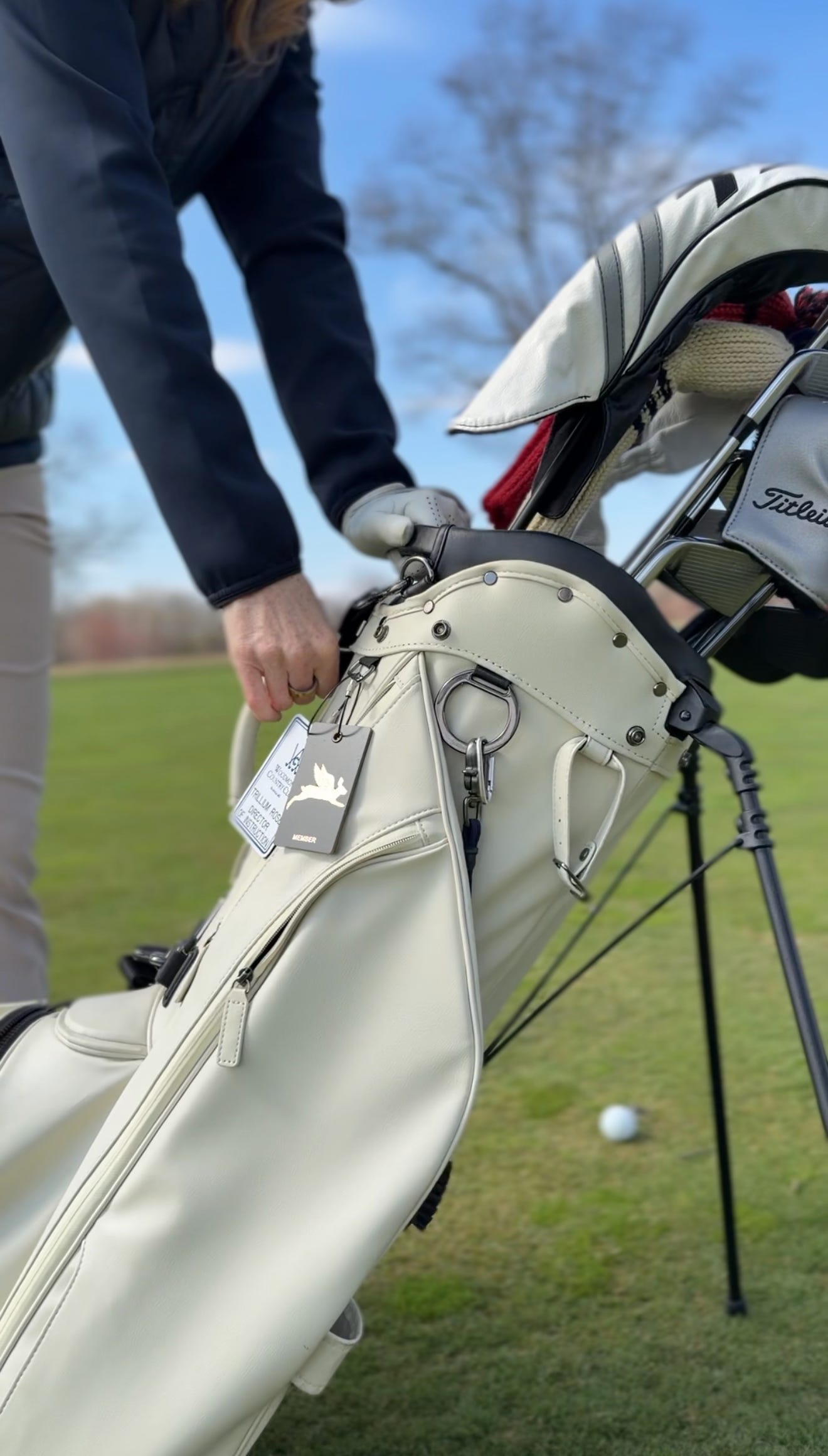
That said, even if you’re not a high-performance athlete with a training plan, or a professional golfer who makes a living playing, you can still use this model. Use the off-season to work on your swing, and use the in-season to put it into play and work with your coach on execution and confirmation rather than major swing changes.
And if you’re feeling rusty, that’s okay. You’ll get there sooner than you think.
Another great article, thanks Trill. Navigating the Expectations vs. Reality gap is a real challenge (and not just int the Spring!). Sadly, every year I have relearn the lesson that realistic expectations lead to a better reality.