

Cold Weather Golf Ideas
How to Keep Your Game Sharp This Winter

Every year when the temperature drops, I tweak my routine to keep my swing—and my body—ready for spring. My winter mix includes strength and mobility work, a regular stretching routine, and Stack speed training three times a week. It’s been a real game-changer. By the time the weather warms up, I already have midseason speed instead of spending April and May trying to “find it again.” If you live somewhere chilly too, don’t worry—you can make meaningful progress all winter without setting foot on a driving range.
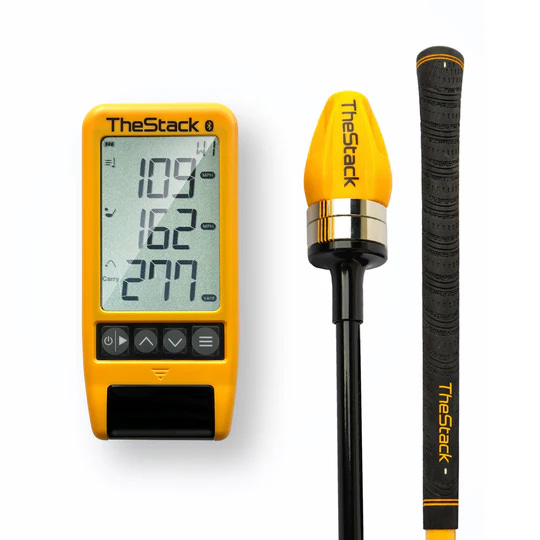
(The Stack System pictured above. Use my code ROSE1 if you want a discount.)
If you live somewhere that turns frigid for half the year, you’ve probably asked yourself what you can do to keep your golf game from going into hibernation. When it’s too cold to swing a club outside, it’s tempting to pack away your clubs and wait for the thaw—but the off-season can actually be one of the most productive times to work on your game.
Think of winter as an opportunity, not an obstacle. When you’re not tied to the course or grinding through tournaments, you finally have space to focus on the why and how of your swing. This is the perfect season to get technical, build consistency, and prepare for spring with a stronger foundation than before.
Step 1: Know What to Work On
Before you start training, you’ll want to know what actually needs attention. That means understanding your patterns—both strengths and weaknesses. I’m a big believer in keeping stats, because memory alone rarely gives the full story of your rounds.

My favorite program for this is Arccos (code ROSE1 for a discount). It’s nearly effortless—just attach it, play your round, and let it automatically collect data. I can tell a lot about a player’s tendencies just from their numbers. For example, if your driving accuracy is lagging but your approach proximities are solid, your time indoors might be better spent on tempo and face control rather than full-swing distance.
Even if you only play sporadically, review your data or scorecards from last season. Try to identify themes in your misses or decision-making. That clarity will make your winter practice time far more productive.
Step 2: Find a Place to Practice
If you can access an indoor golf facility, schedule consistent sessions—ideally weekly. It could be a local simulator lounge like Five Iron Golf or Topgolf Swing Suite, or even a community space with a hitting bay.
Simulator golf isn’t identical to being out on the grass, but it’s a great bridge between seasons. You’ll keep your body moving, maintain your rhythm, and get valuable feedback on swing path and clubface angles. The key is routine—don’t let the winter months slip by.
Step 3: Putt—Even Indoors
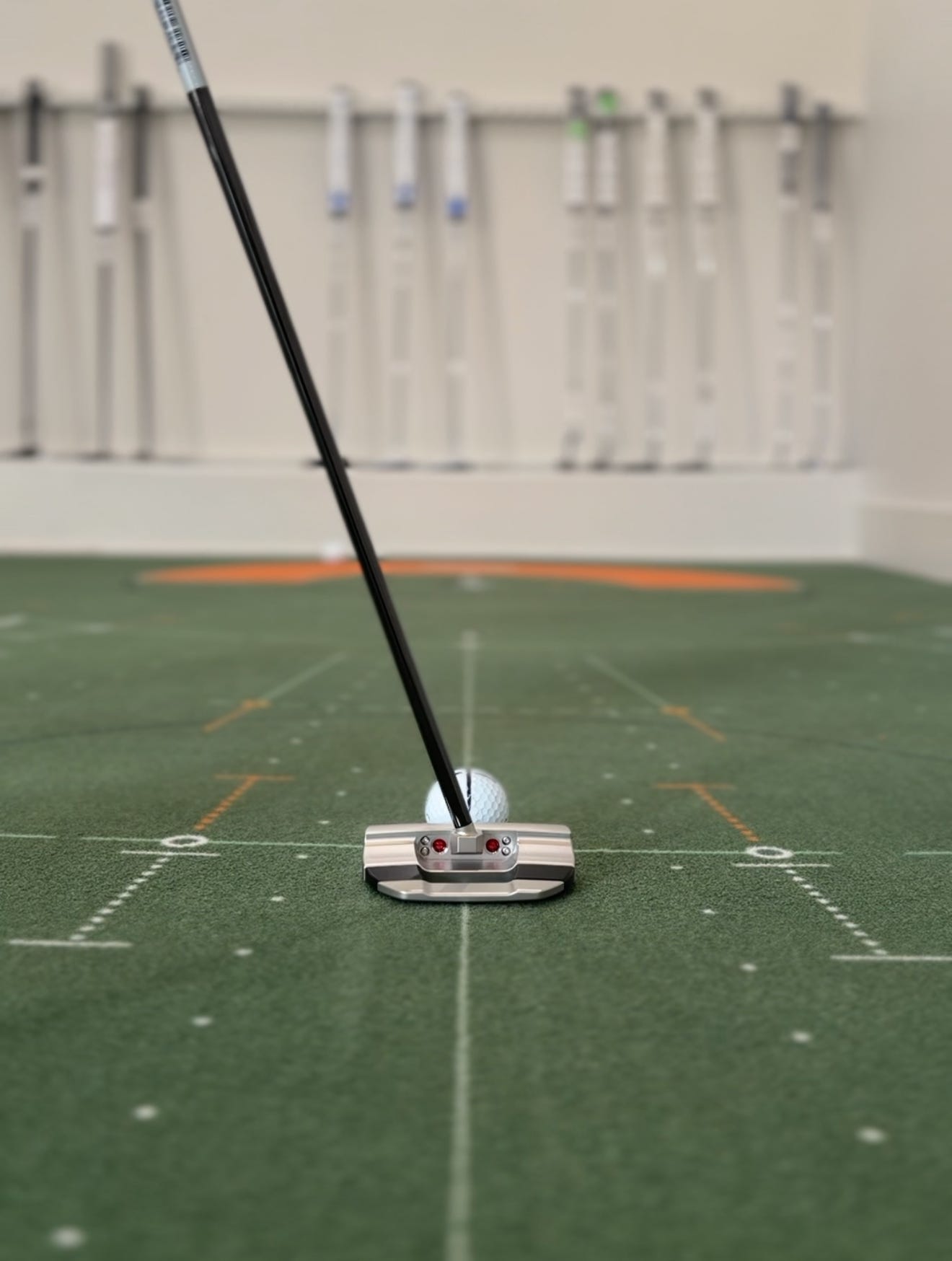
Putting might be the easiest—and most underrated—skill to train during the off-season. If you can find even ten feet of carpet or rug, you can get meaningful practice in.
Two tools I like for indoor putting are:
Wellputt Mat (10 ft) – excellent for feedback and distance control.
Mi Putting Template by Visio – perfect for working on start line accuracy and alignment.
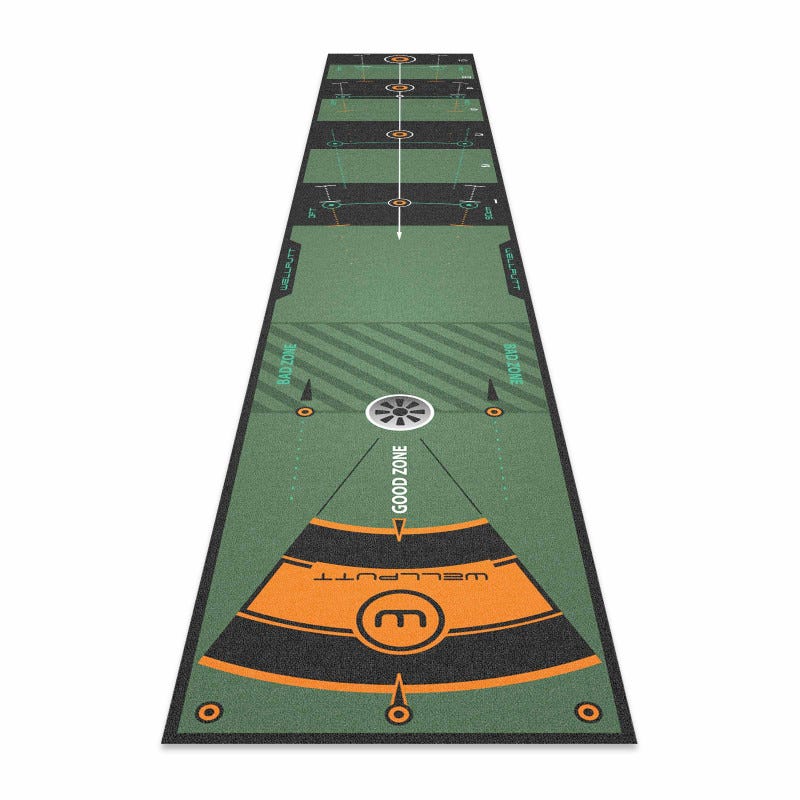
Focus your winter putting work on two key skills:
Distance Control – The goal here is to consistently stop the ball within 3 feet of your target. Try varying your stroke length to learn the feel of each distance.
Start Direction – Aim at a small target and see if your ball starts on that exact line. This drills your clubface control at impact—a vital skill when the greens open again.
If your start line is inconsistent, check these fundamentals:
Right and left-hand grip pressure
Eye stability (avoid looking all over the place)
Body alignment—too open or closed at address
Shoulder or pelvis movement during stroke
All great putters have different techniques, but they share one essential trait: every ball starts on their intended line. Nail that skill now, and you’ll hit the ground running when the snow melts.
Wrapping Up
Winter doesn’t have to mean losing touch with your golf game—in fact, it can be one of the most valuable times to grow. A little structure goes a long way: analyze your stats, create a routine, and prepare your body to move better and faster.
When you treat the off-season like a training camp instead of downtime, you’ll walk onto that first tee in spring feeling more confident—and ready to play your best rounds yet.
Don't forget the best wins in the offseason are in the gym and the kitchen.